
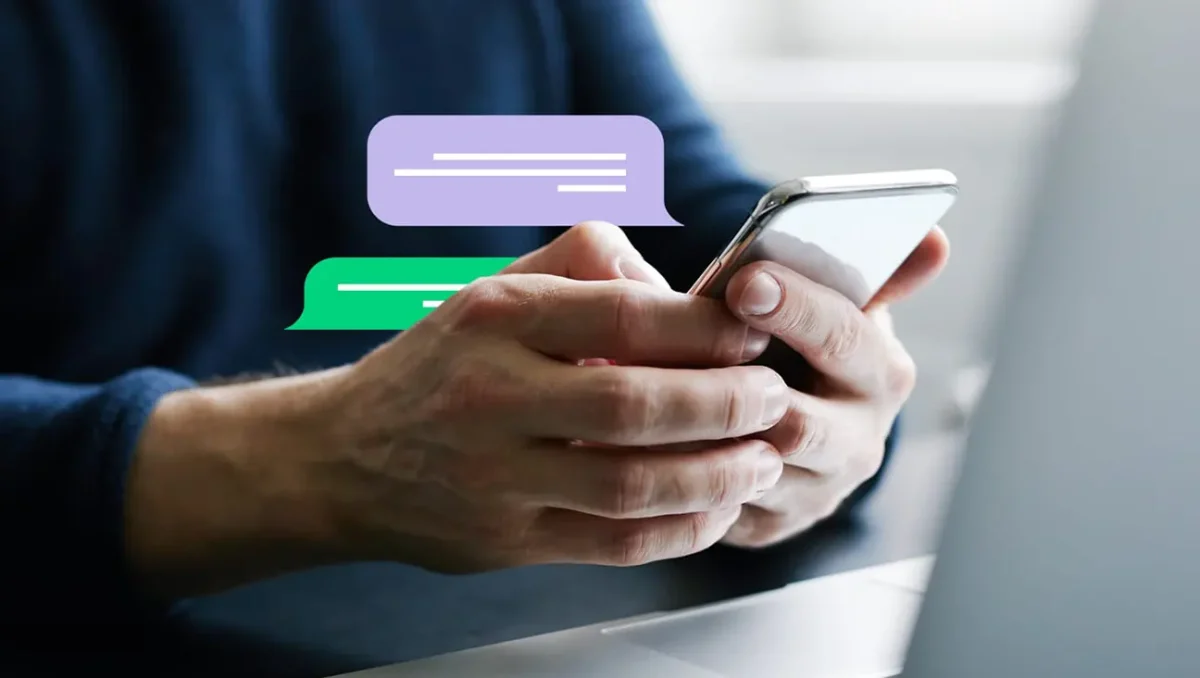
Your phone buzzes. It’s a text from your bank warning about suspicious account activity — “click here to verify immediately.” Or maybe it’s a notification that your package delivery failed and you need to update your address. Or a message saying you owe a small toll fee that needs urgent payment.
Except none of it is real. Welcome to smishing — phishing’s more personal, more trusted and increasingly more dangerous cousin.
What Makes Smishing Different (and More Effective)
Smishing is phishing that happens through text messages instead of email. The name combines “SMS” and “phishing,” but the threat is anything but simple.
Here’s why smishing works so well: We trust our text messages differently than we trust email. When your phone buzzes with a text, you’re far more likely to read it immediately, believe it’s legitimate and act on it without questioning. Cybercriminals know this. In fact, research shows that text messages have click-through rates of 19-36% — compared to just 2-4% for phishing emails. That’s a staggering difference.
Smishing messages impersonate banks, delivery services, government agencies, toll operators and even your coworkers. They create urgency: Your account is compromised, your package is stuck, your toll is overdue, you’ll lose access if you don’t act now. The goal is always the same — get you to click a malicious link, share sensitive information or download malware onto your phone.
But not all smishing attacks are urgent. Some are designed to start a conversation. You might get a text like “Are we still on for Wednesday night?” or “Hey, is this still your number?” or “Thanks for lunch yesterday!” These messages seem innocuous — just someone who texted the wrong number, right? Wrong.
These conversational smishing attempts are designed to get you to respond. Once you engage, the scammer knows your number is active and starts building rapport. They might apologize for the wrong number, then continue chatting. Eventually, they’ll steer the conversation toward romance scams, investment opportunities or requests for help that involve sending money or sharing personal information. The key is that they’re playing the long game, building trust before they strike.
And unlike emails that might get caught by spam filters, text messages land directly on your phone with no technical barrier between the scammer and you.
Why Mobile Users Are Prime Targets
Your smartphone isn’t just a communication device anymore — it’s your mobile office, your banking app, your authentication method and your gateway to company data. That makes it an incredibly attractive target for attackers.
Mobile devices have fewer security layers. Most phones don’t have the same robust security software that protects computers. Antivirus programs, email filters and firewalls that might catch threats on your laptop often don’t exist on your phone.
We use phones constantly and quickly. You’re checking texts while walking between meetings, waiting in line or multitasking through a dozen other things. That distraction makes you more likely to click without thinking critically.
Work and personal blend together. Your work email is on the same device as your personal texts. One successful smishing attack can give criminals access to both your personal accounts and your company’s network — especially if you’re using the same device to access company resources or if you reuse passwords.
Attackers exploit small screens. On a phone, it’s harder to hover over a link to see where it really goes. It’s harder to spot a slightly misspelled sender name. The limited screen real estate makes it easier for scammers to hide red flags that might be obvious on a larger screen.
The Smishing Problem Is Getting Worse
In 2025, smishing attacks are surging. Just recently, Google filed a federal lawsuit against a massive cybercriminal network that has compromised anywhere from 15 million to 100 million credit cards through text message scams targeting U.S. residents.
The attackers use sophisticated phishing-as-a-service operations, meaning they’ve industrialized the process. They can send thousands of personalized smishing messages at scale, rotating through new websites and phone numbers daily to avoid detection. They’ve impersonated E-ZPass toll services, USPS package deliveries, bank fraud alerts and even government officials.
And just like with email phishing, AI has made everything worse. Attackers now use AI to write convincing messages with typical grammar, to analyze your communication patterns from public sources and to personalize mass attacks so they feel individually crafted. The spelling errors and awkward phrasing that used to give scams away? Gone.
Simple Habits That Protect Your Company Data
The good news is that defending against smishing doesn’t require becoming a cybersecurity expert. It requires developing a few critical habits that slow you down and make you think before you act.
Stop and verify before clicking anything
This is the single most important defense against smishing. Attackers count on your impulse to act immediately. Break that pattern.
Don’t click links in unexpected texts. If you get a message from your bank, a delivery service or any organization asking you to take action, don’t click the link. Instead, open your browser or the official app and log in directly. If there really is a problem with your account or a package, it will show up there too.
Check the sender’s number. Legitimate companies rarely text from random 10-digit phone numbers or strange international codes. If your bank usually texts you from a short code (like 12345), be suspicious of messages coming from full phone numbers.
Watch for urgency and threats. “Your account will be closed in 24 hours.” “Immediate action required.” “You will be charged if you don’t respond.” Legitimate organizations rarely create this kind of panic, especially over text. Urgency is a manipulation tactic designed to shut down your critical thinking.
Question unexpected messages — even from people you know. If you get a text from a coworker asking you to buy gift cards, click a link or share sensitive information, verify it’s really them through another channel. Call them. Walk to their desk. Text them on a platform you’ve used before. Attackers can spoof phone numbers or compromise accounts to make messages look like they’re from trusted contacts.
Don’t engage with “wrong number” texts. If you get a text that seems like it’s meant for someone else — like “Are we still on for dinner?” or “Is this still your number?”—don’t respond. Just delete it. Even a simple “wrong number” reply confirms your number is active and opens the door for scammers to continue the conversation. Legitimate wrong numbers don’t need your help figuring out they made a mistake.
When in doubt, go directly to the source
Never use contact information provided in a suspicious text. If a message claims to be from your bank, call the number on the back of your credit card — not the number in the text. If it says there’s a problem with a package, open the delivery company’s app or website directly instead of clicking the link.
This simple habit — bypassing the text and going straight to the official source — stops smishing attacks in their tracks. Because if the message was legitimate, the issue will still be there when you check directly. And if it was a scam, you’ve just avoided handing over your credentials or clicking malware.
Create a workplace culture where verification is normal
One of the most powerful things your company can do is make it completely acceptable to question messages and verify unusual requests. Employees should never feel embarrassed about double-checking a text from the CEO, calling a vendor to confirm account changes or asking IT about a suspicious message.
The reality is that one successful smishing attack can give criminals access to sensitive client data, financial accounts or your entire network. The cost of that breach — in money, trust, operational disruption and regulatory consequences — far exceeds the thirty seconds it takes to verify a text message.
You Need More Than Good Habits
Employee awareness is essential, but it’s not enough. Your business also needs technical protections: mobile device management that enforces security policies, multi-factor authentication that protects accounts even if passwords are compromised, endpoint security for mobile devices, secure messaging platforms for business communications and incident response plans for when an attack succeeds.
That’s a lot for a business to manage on top of running its actual operations.
This is exactly why F1 IT exists. When your business depends on technology — and today, every business does — you can’t afford to wing it. One security incident could cost you everything you’ve built. From comprehensive IT support to government-level security compliance, we handle the complex world of technology so you can focus on what you do best: serving your clients and business.
We’re not just another IT company. We’re your strategic technology partner with the certifications and expertise to protect what matters most to you. We put in the work, take pride in what we do and always strive to exceed expectations — because that’s who we are.
Ready to stop worrying about whether the next text will compromise your business? Let’s talk about building real security into every layer of your operations. Reach out to us here on our website. From hosting a staff training to a strategic partnership to a complete IT takeover, we’re here to serve.