
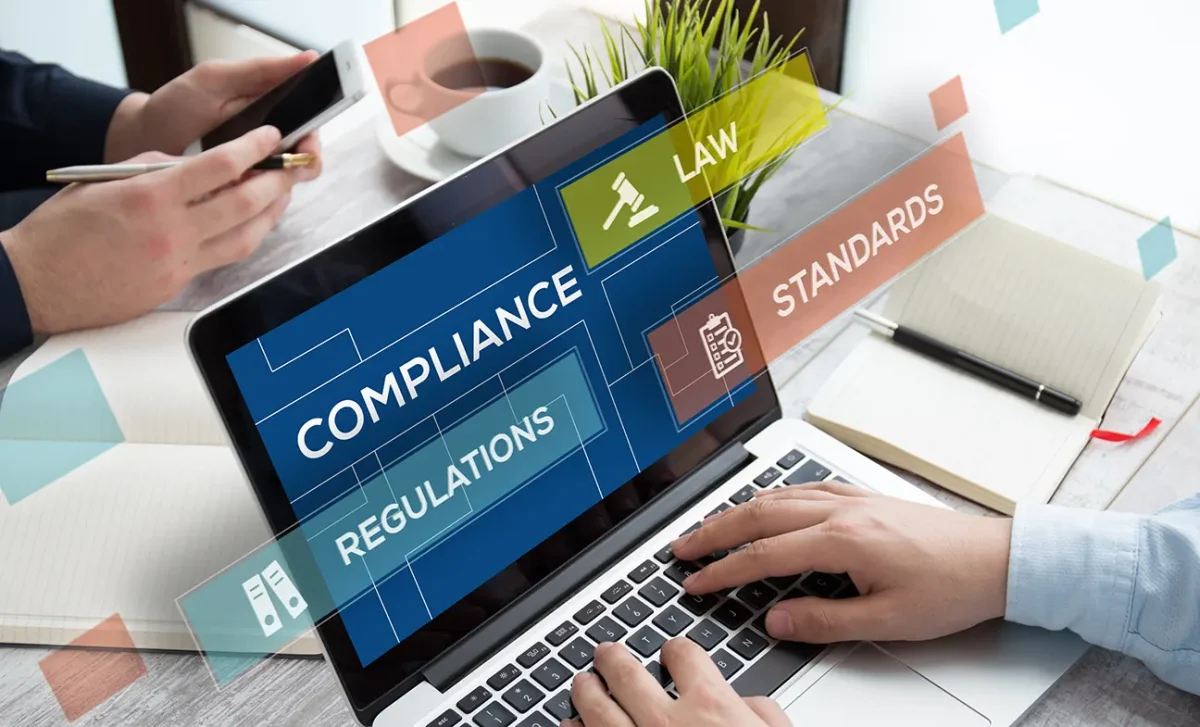
You’re running a small business. Maybe you’re a medical practice with three doctors, a retail shop that takes credit cards or an IT contractor who occasionally works with law enforcement agencies. Compliance feels like something only big corporations need to worry about, right?
Wrong. About 55% of HIPAA fines now target small practices, and Payment Card Industry Data Security Standard (PCI DSS) violations can result in penalties ranging from $5,000 to $100,000 per month. The size of your business doesn’t matter to regulators — if you handle protected data, you’re held to the same standards as the largest organizations in your industry.
What IT Compliance Actually Means for Your Business
IT compliance is a set of security standards and regulations that govern how you must protect sensitive information — whether that’s patient health records, credit card data or criminal justice information. These aren’t suggestions. They’re legal obligations that apply to you whether you have five employees or five thousand.
The Compliance Standards Small Businesses Need to Know
Depending on what kind of data your business handles, you may need to comply with one or more of these major frameworks:
HIPAA: Protecting Patient Health Information
If your business touches healthcare in any way — you’re a medical practice, dental office, mental health clinic, medical billing service, IT provider for healthcare organizations or even a shredding company — you need to comply with the Health Insurance Portability and Accountability Act (HIPAA).
HIPAA requires three types of safeguards: administrative (security officers, risk assessments, employee training, breach reporting), physical (locked cabinets, badge access, screen privacy, secure disposal) and technical (access controls, encryption, audit logs, authentication).
Small businesses can tailor their approach based on size and risk, but “flexible” doesn’t mean optional — you must implement appropriate safeguards, document your decisions and prove compliance during audits.
PCI DSS: Securing Payment Card Data
If you accept credit or debit cards, you must comply with the Payment Card Industry Data Security Standard (PCI DSS). The standard requirements include: maintain firewalls, change default passwords, encrypt cardholder data, use anti-malware, maintain secure systems, restrict data access, assign unique user IDs, restrict physical access, track network access, test security regularly and maintain security policies.
Small businesses typically qualify as Level 3 or Level 4 merchants (under 1 million transactions annually) and complete Self-Assessment Questionnaires and quarterly vulnerability scans. The easiest way to reduce PCI scope? Don’t store cardholder data. Instead, use modern payment processors that handle tokenization and encryption.
CJIS: Protecting Criminal Justice Information
If you provide services to law enforcement agencies, courts or organizations handling Criminal Justice Information (CJI) — arrest records, criminal histories, fingerprints, investigative reports — you must comply with the FBI’s CJIS Security Policy.
CJIS extends to contractors, IT providers, cloud vendors and anyone accessing or storing CJI. Key requirements include mandatory multi-factor authentication, security awareness training, strict access controls, encryption for CJI, comprehensive audit logging and formal incident response plans.
The FBI conducts audits every three years. Non-compliance can result in criminal charges, loss of FBI database access, substantial fines and contract termination.
Why Meeting These Standards Matters Beyond Avoiding Fines
Your business survives on trust. One breach can destroy years of reputation-building overnight. Clients leave, word spreads and your business becomes known as the company that couldn’t keep data safe.
Breaches are devastatingly expensive. The average cost of a healthcare data breach is $6.45 million — and that doesn’t include HIPAA fines. For small businesses, a single breach can mean bankruptcy between notification costs, legal fees, system remediation and lost business.
Compliance failures end contracts. A HIPAA breach terminates Business Associate Agreements. PCI non-compliance means payment processors refuse to work with you. CJIS violations mean immediate loss of system access. Each scenario can shut down your ability to operate.
Good security protects operations and demonstrates professionalism. Compliance requirements are based on security best practices. Meeting them protects you from ransomware, data theft and system compromises while showing potential clients you take security seriously — a differentiator that wins contracts.
The Problem: Compliance Is Complex and Resource-Intensive
Small businesses struggle because compliance is genuinely complicated. You need risk assessments, security policies, technical controls, employee training, detailed documentation, continuous monitoring, regular security testing, vendor management, incident response and audit preparation.
Most small businesses don’t have a dedicated compliance officer, IT security team or specialized legal counsel. You have a business to run and employees already wearing multiple hats. Trying to figure out compliance on your own means hundreds of hours researching, potentially implementing wrong controls, missing critical documentation and still not knowing if you’re actually compliant when audits happen.
How F1 IT Takes Compliance Off Your Hands
This is exactly what F1 IT specializes in. We implement the necessary programs, tools, networks and safeguards so you’re properly protected and provably compliant. Our approach is taking these complex requirements off your hands so you can focus on your actual work.
We assess your current state to identify gaps. We implement technical controls — firewalls, encryption, access controls, multi-factor authentication, monitoring, logging, secure backups and network segmentation. We develop comprehensive policies customized to your business. We train your team on security awareness. We maintain ongoing compliance through continuous monitoring, regular risk assessments, system updates and documentation. And we prepare you for audits with the evidence and trails that prove compliance.
From comprehensive IT support to government-level security compliance, we handle the complex world of technology so you can focus on serving your clients and growing your business.
The Bottom Line
Compliance isn’t optional, and “we’re too small” isn’t a defense that holds up in court or prevents penalties. The regulations exist to protect real people from real harm, and they apply to every organization that handles protected data — regardless of size.
But compliance also doesn’t have to be the overwhelming burden that keeps you up at night, wondering if you’re doing enough or if you’re one audit away from catastrophic fines.
We’re not just another IT company. We’re your strategic technology partner with the expertise and certifications to protect what matters most to you. We’re compassionate, trustworthy, drama-free and intentionally humble. We put in the work, take pride in what we do and always strive to exceed expectations — because that’s who we are.
Ready to stop worrying about compliance and move forward with the confidence that you’re properly protected? Let’s talk about building a security and compliance program that actually works for your business.